A Farmhouse That
Grew Into a Homestead
From a quiet clearing in the foothills of Mt. Banoy to one of Calabarzon's most loved eco stays — this is how The Red Hen Homestead came to be.
Where Forest Meets Farm,
and Farm Meets Trail
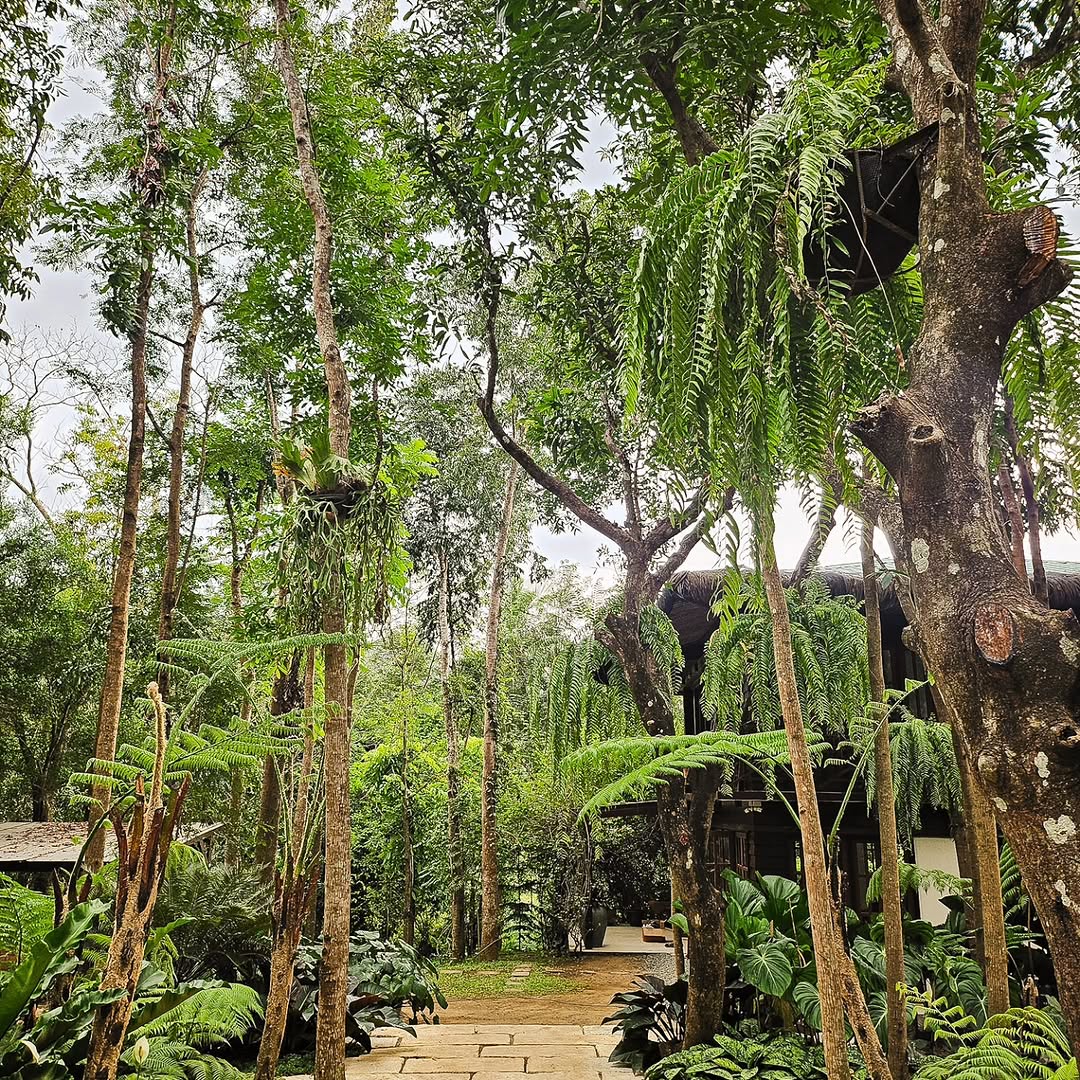
At the foothills of Mt. Banoy in Batangas City, where the forest meets the farm and the farm meets the mountain trail, stands a one-hectare property that has quietly become one of the most loved hideaways in Calabarzon. The Red Hen Homestead earns its name not from branding or marketing, but from the sound of free-range chickens clucking past the patio at sunrise — from the weight of a fresh egg gathered warm from the coop.
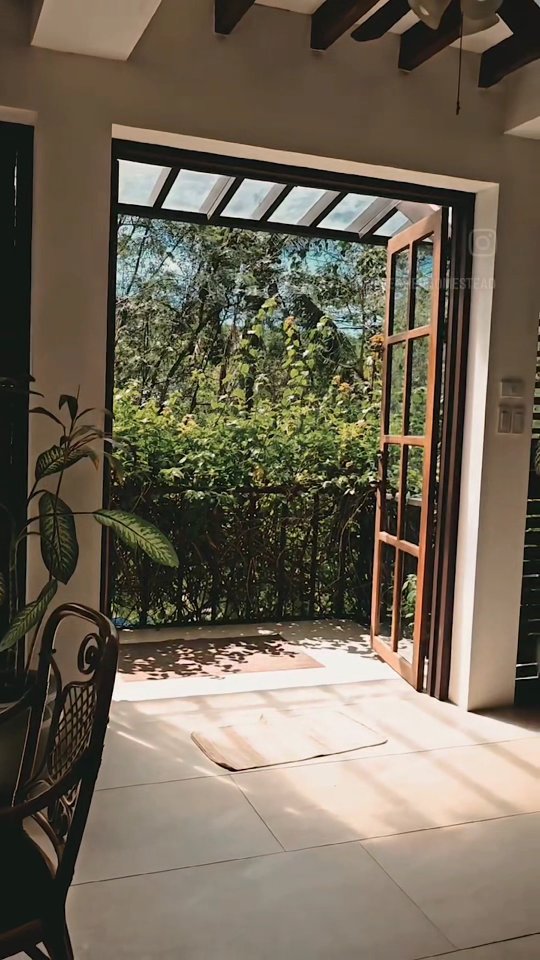
The property began as a private family retreat, built in the tradition of Filipino heritage architecture: two storeys of weathered hardwood, cogon-thatched rooflines, and open louver windows that invite the mountain air to move freely through every room. Over time, the farm grew — chickens first, then ducks and geese, then a permaculture vegetable garden that slowly took over a corner of the property in the best possible way.
What guests discover when they arrive is that the homestead was never designed for an audience. The brick pizza oven is well-seasoned because the family used it. The caretakers — locally known as kuyas — have been here since the beginning, and their warmth is not a hospitality script. It is simply who they are. The 25-metre lap pool stays pristine because the caretakers maintain it daily, as they do everything here: attentively, quietly, without being asked.
The Red Hen Homestead opened to guests and quickly attracted attention from travel writers and digital nomads discovering Batangas beyond the ferry and the dive sites. Word spread — not through advertising, but through people who came, rested, and returned. The Instagram following grew organically to over 11,000. The Booking.com score settled at 8.4 out of 10, with guests citing the same things again and again: the space, the quiet, the care.
Three Pillars of
the Homestead Life
The Red Hen Homestead is guided by three interlocking beliefs — in the value of slowness, the responsibility of living on the land, and the dignity of Filipino craftsmanship.
Slow Living
In a world that rewards hurry, the homestead rewards staying. Breakfast takes as long as it needs to. The walk to the coop to collect eggs is not a detour — it is the point. Mornings here carry the particular quality of time that belongs only to farms: unhurried, smelling of soil and wood smoke, lit by the kind of light that only arrives when you have stopped rushing toward it.
Eco-Consciousness
The homestead runs entirely on solar power. Rainwater is harvested and directed to the garden. Biodynamic and permaculture principles guide what grows in the soil, and what the soil gives back. Sustainability here is not a feature to be listed on a booking platform — it is the only way the owners know how to live on the land. The food on the breakfast table begins in the ground a few metres away.
Filipino Heritage
The two-storey farmhouse is built in the vernacular tradition: hardwood structural timbers, cogon thatching, rattan accents, and the generous open louver windows that have cooled Filipino homes for centuries. The architecture breathes. It belongs to the landscape rather than sitting on top of it. Guests who arrive from concrete cities often say the same thing — that the house feels older than its years in the best possible sense.
Five Values That
Shape Every Stay
Genuine Hospitality
The kuyas are not staff performing a role — they are neighbours who genuinely care about your comfort.
Ecological Stewardship
Solar, rainwater, biodynamics — every decision on this property asks first what the land needs.
Whole-Property Privacy
Your group books the entire homestead. No other guests, no shared spaces, no compromises.
Farm-to-Table Integrity
What grows in the garden feeds the table. Eggs come from hens you may have fed that very morning.
Cultural Rootedness
The homestead celebrates Filipino craftsmanship, building traditions, and the slow rhythms of rural Batangas.
The Homestead
Through the Years
2022
First Media Feature — WindowSeat PH
The homestead received its first significant editorial coverage from WindowSeat PH, a leading Philippine travel publication. Readers discovered a property that felt unlike the curated glamping sites proliferating across Luzon — something more lived-in, more honest, more rooted.
2022
First Vlog Feature
A video feature brought the homestead to a broader audience — showing, rather than telling, what a stay here actually looks and feels like. The cook-out. The morning coop visit. The hike. The pool at golden hour. The views resonated, and the Instagram following began its organic climb.
Airbnb Recognition & 100% Recommend Rate
Consistent guest reviews on Airbnb consolidated a 100% recommend rate — a benchmark the homestead has maintained. The farm experience and the caretakers' extraordinary care were cited repeatedly as distinguishing factors.
Booking.com 8.4/10 · 41 Reviews
An 8.4 out of 10 score across 41 Booking.com reviews placed The Red Hen Homestead firmly in the upper tier of Batangas City accommodations. Guests highlighted the cleanliness of the pool, the spaciousness of the home, and the warmth of the on-site caretakers.
Ongoing Farm Expansion & Permaculture Development
The farm continues to grow — new sections of the permaculture garden, expanding the free-range flock, deepening the biodynamic practices. The homestead is never finished. That is, the owners believe, precisely as it should be.
Followers
Rating
Recommend Rate
Farmstead
Your Escape
Begins Here
See What's Waiting
at the Homestead
Four bedrooms, five bathrooms, a 25-metre lap pool, a brick pizza oven, a free-range farm, and a mountain at the doorstep — all exclusively yours.
View the Full HomesteadSecure the Homestead
for Your Group
Book through Airbnb or Booking.com, or send us a message on Facebook or Instagram for inquiries and special arrangements.
Book on Airbnb